
Move beyond a single view of the face
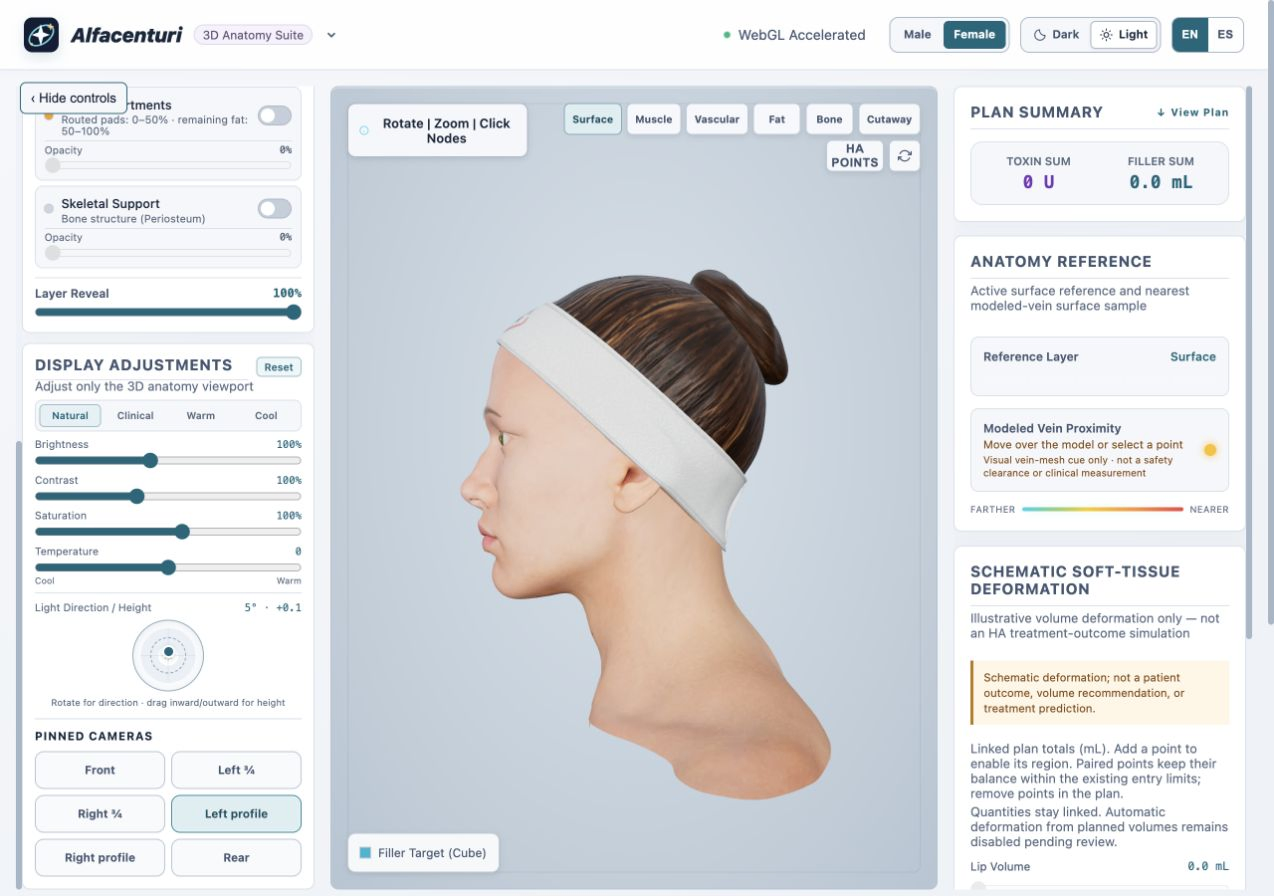
A female profile with fixed camera views and display controls visible.
View full-size screenshotA front view and an oblique view answer different visual questions. Rotate the model to inspect the contour from another angle, then zoom to focus on the region you are reviewing. The reset control brings the camera back to its starting view, so you can return to a consistent orientation after exploring.
Both male and female models are available from the main interface. Switching models provides another reference for visual discussion; the displayed anatomy remains a general model, not a reconstruction of an individual patient.
Study the relationship between anatomical layers
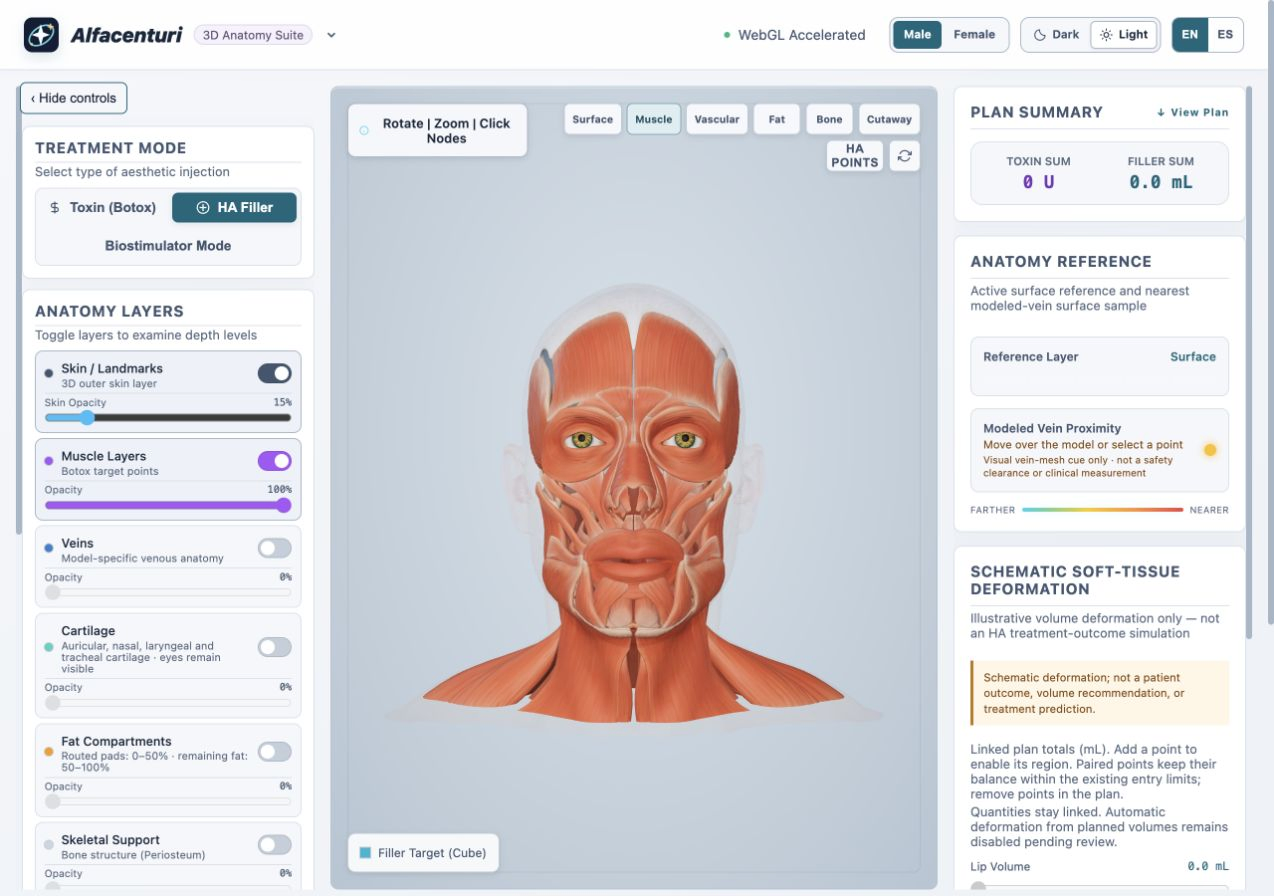
The male model with muscle anatomy exposed and layer opacity controls alongside it.
View full-size screenshotThe layer controls cover the surface, musculature, vascular anatomy, fat compartments and skeletal support. Show the structures relevant to the current discussion and reduce the opacity of another layer when it obstructs the view. This lets you compare the position of a visible surface with the anatomy represented beneath it.
You can focus on one layer or combine several. For example, a review of facial contours may use the surface and skeletal views, while a discussion of expression may focus on muscle anatomy. The controls change the display; they do not establish a patient-specific diagnosis or a treatment recommendation.
Adjust the display without losing your place
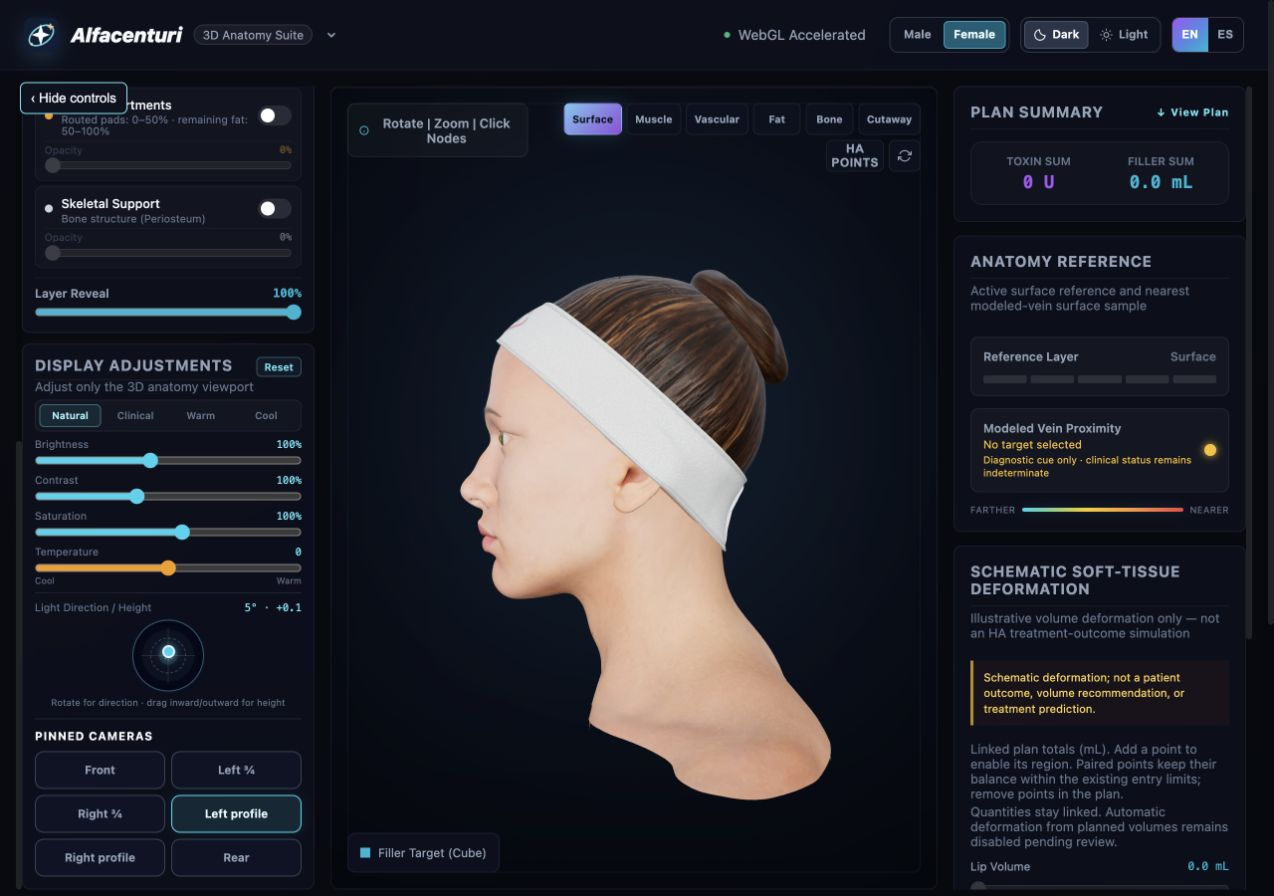
The profile view in the dark interface, with brightness, contrast and lighting controls.
View full-size screenshotLight and dark interface modes provide different working backgrounds. Display controls also adjust the tone of the 3D viewport, while layer opacity determines how strongly a structure appears. These are separate choices: one changes the appearance of the viewer, and the other changes the visibility of the anatomy.
On a phone, the viewer brings its main tools into a compact layout. On a larger screen, more of the controls can remain beside the model. Rotate, zoom, inspect a layer and return to the plan without moving to a separate anatomy document.
Use the viewer as a shared visual reference
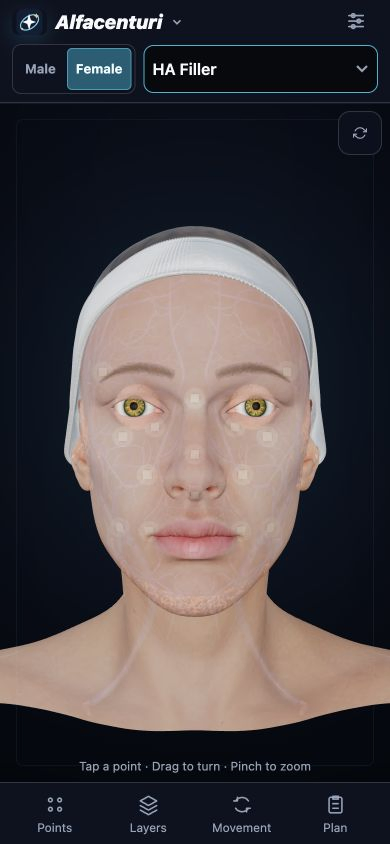
The frontal view on a phone, with anatomy and planning tools within reach.
View full-size screenshotAn anatomical image can give a conversation a clear point of reference. The same model can support a clinician’s review, a discussion of facial regions or an explanation of the areas represented in a proposed plan. Alfacenturi keeps the visual reference close to the planning tools so the discussion can move between anatomy and the proposal.
Questions about the software
Which facial anatomy layers can I view?
The interface includes surface, muscle, vascular, fat and bone controls. Layer visibility and opacity let you choose which structures appear together in the model.
Is the 3D model a scan of my patient?
No. The male and female models are general anatomical references. Patient photographs submitted through a clinic portal are separate from these models.
Can I use the viewer in Spanish?
Yes. Select ES in the main interface to use the Spanish anatomy controls, or EN for English. The app also offers light and dark appearance modes.